
Jesus in Context

The Prophet Like Moses and the Attempt to Make Jesus King

Political/Legal Context •  John
A Visit With Jesus
After the feeding, the crowd identifies Jesus as 'the Prophet' and moves to make him king, combining Mosaic expectation with politically charged hopes that Jesus refuses to let the crowd control.
Political/Legal Context

Introduction

The feeding produces an immediate conclusion among the crowd: Jesus is 'that prophet that should come into the world.' John then says they intend to seize him and make him king.

The response joins scriptural expectation to the political language of kingship.

Historical and Cultural Context

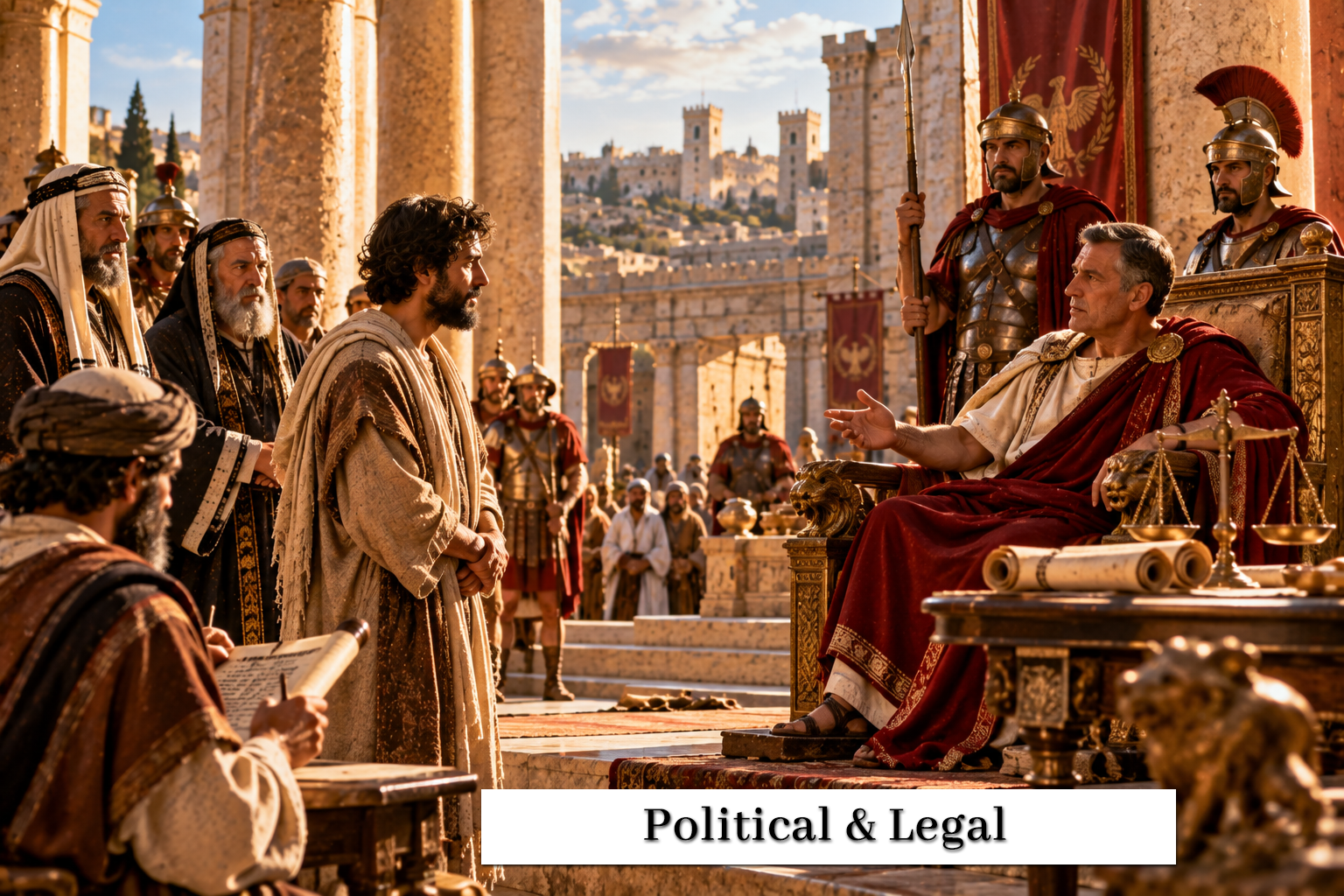
'The Prophet' most naturally recalls Deuteronomy 18 and the promised prophet like Moses. The feeding itself can strengthen Mosaic associations because Israel received miraculous food in the wilderness. Under Roman imperial power and Herodian rule, an unsanctioned popular kingship movement could carry obvious political danger.

John does not portray Jesus as accepting the crowd's program. He withdraws alone to the mountain.

Why It Matters

The historical setting shows why 'make him king' is not merely enthusiastic religious praise. Kingship was a public and political claim in a land governed within Rome's imperial system.

John's Jesus does claim kingship elsewhere, but he refuses to receive it on the crowd's terms. The sign reveals his identity; it does not authorize the crowd to define the nature of his mission.

Scripture References

Related People