
Jesus in Context

Twelve Baskets of Fragments

Material Culture
A Visit With Jesus
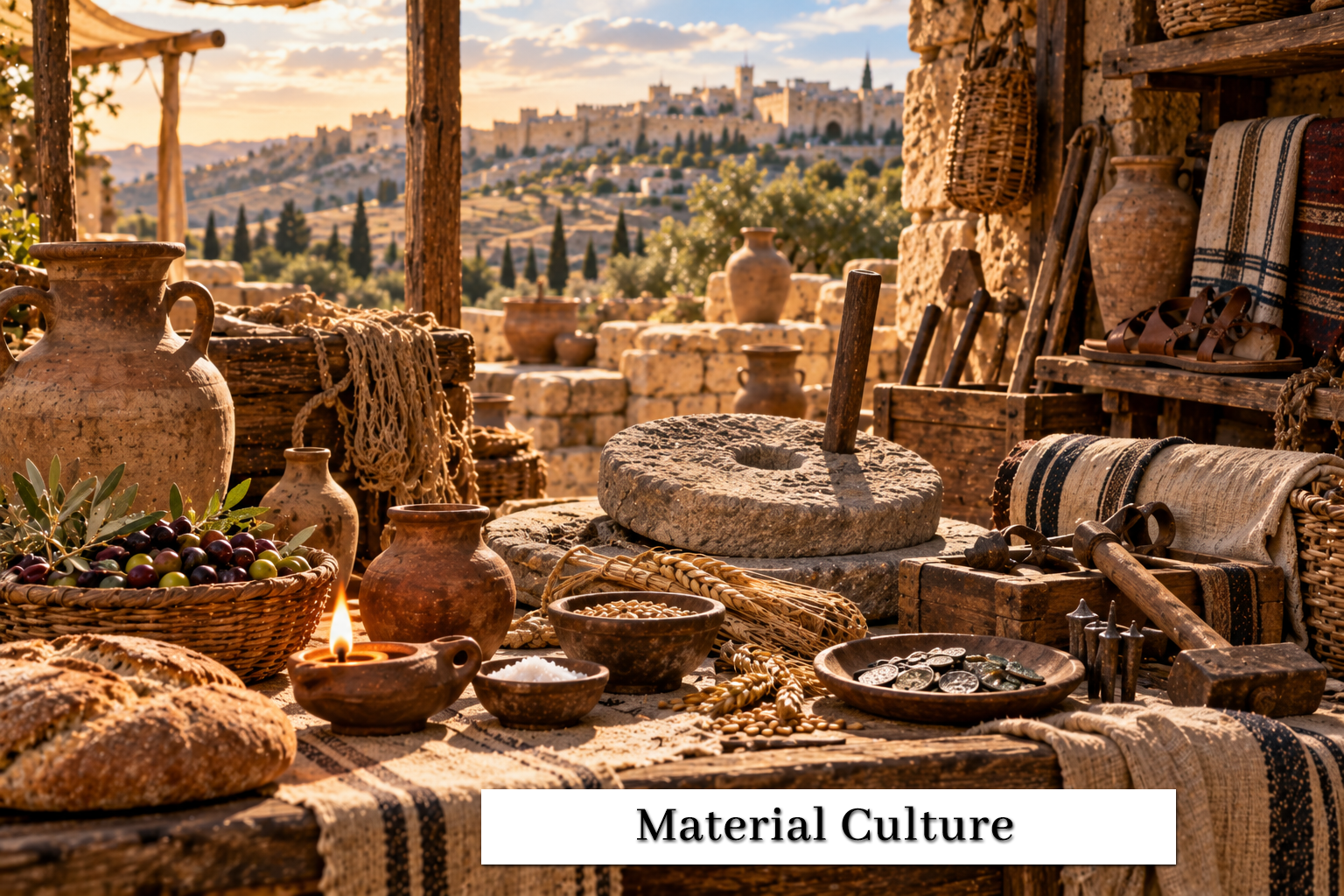
The twelve baskets gathered after the feeding show tangible abundance and reflect ordinary containers used for carrying food and other goods.
Material Culture

Introduction

After everyone has eaten, Jesus tells the disciples to gather the remaining fragments so that nothing is lost. They fill twelve baskets.

The detail turns abundance into something countable and visible: the leftovers exceed the small amount with which the meal began.

Historical and Cultural Context

Baskets were indispensable containers in ancient daily life, used to carry food, produce, and other goods. The Greek term in John denotes a basket but does not allow a precise modern size to be assigned to every example.

The number twelve naturally invites association with Israel and the twelve disciples, but John does not explicitly explain the symbolism. The most immediate narrative point is the extraordinary surplus after the entire crowd has eaten.

Why It Matters

The baskets prevent the feeding from being imagined as a token distribution in which everyone receives only a symbolic crumb. John says the people ate and the remaining pieces filled twelve containers.

The command that nothing be lost also gives the abundance an ordered quality: miraculous provision does not make the food disposable.