
Jesus in Context

Two Hundred Denarii Would Not Buy Enough Bread

Commerce and Money •  John
A Visit With Jesus
Philip's estimate of two hundred denarii makes the scale of feeding the crowd concrete: he imagines a sum representing many months of ordinary wages and still considers it inadequate.
Commerce and Money

Introduction

When Jesus asks Philip where bread can be bought for the crowd, Philip answers in monetary terms: two hundred denarii would not provide enough for everyone to receive even a little.

The figure is meant to make the ordinary economic solution look daunting.

Historical and Cultural Context

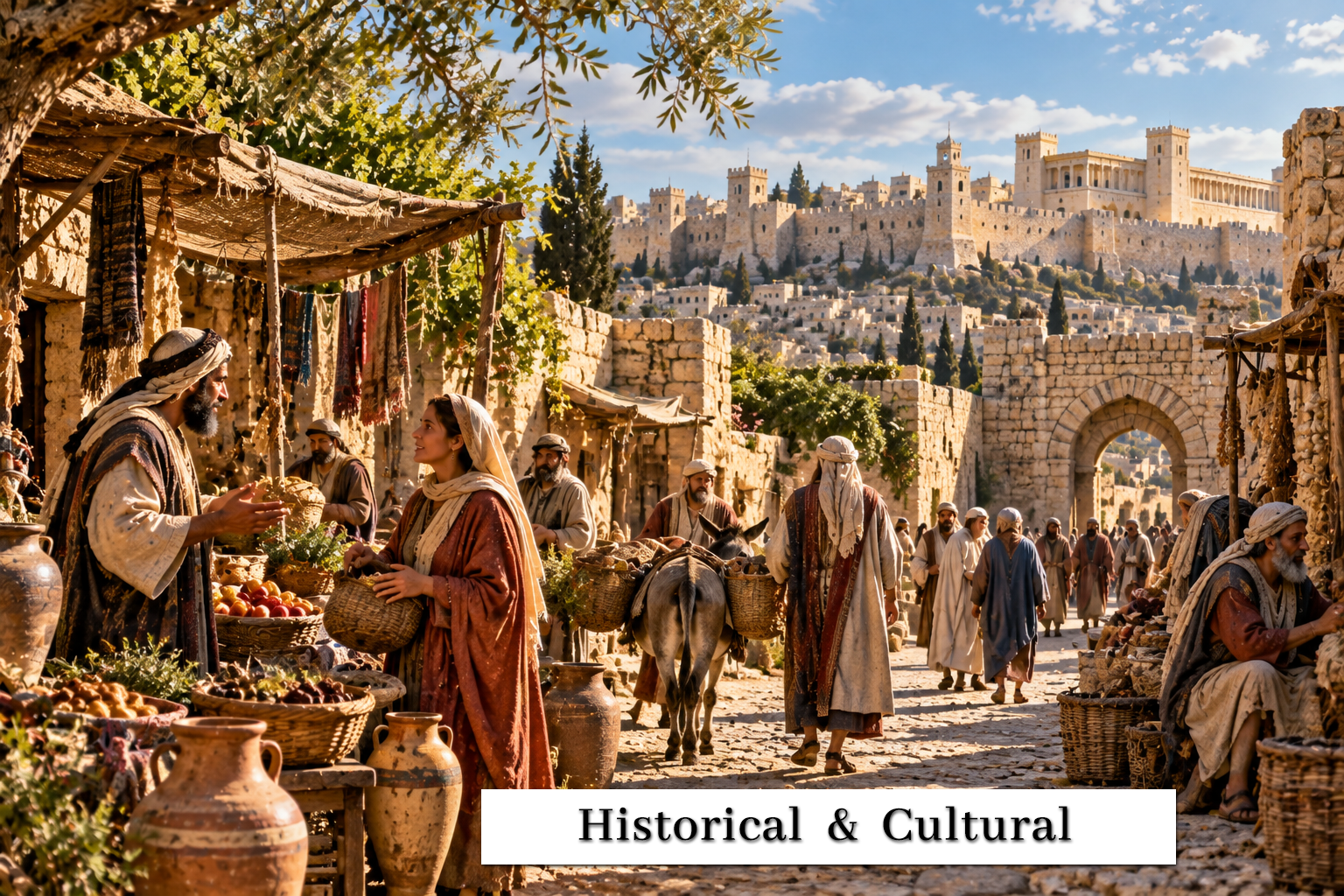
The denarius was a common Roman silver coin and appears in Gospel contexts as a representative day's wage for a laborer, though actual wages varied by occupation, region, and circumstance. Two hundred denarii therefore represented a very substantial amount for ordinary people.

Philip is not necessarily presenting a precise shopping calculation. His estimate communicates the practical impossibility of feeding such a multitude from the disciples' available resources.

Why It Matters

The ancient value of the coin helps recover the force of Philip's response without converting it into a misleading modern dollar amount. The disciples face a problem beyond their normal purchasing power.

John then contrasts that economic calculation with Jesus' provision, moving the narrative from what money cannot accomplish to the abundance of the sign.

Scripture References