

Barnabas was a Levite from Cyprus. His real name was Joseph, but the apostles nicknamed him Barnabas meaning “son of encouragement,” because he loved to encourage others. Barnabas’ name appears 23 times in Acts, and 5 times in the letters of Paul.
Barnabas emerges as a pivotal character in the Acts of the Apostles and exemplifies the Christian virtues of generosity, leadership, and reconciliation. His contributions were not limited to the financial support of the Apostles but extended to his pivotal role in nurturing the infant church and championing the inclusion of Gentiles.
A noticeable trait of Barnabas is that he seeks out and assists others. The Biblical text highlights this twice with Saul/Paul (Acts 9:26-28; Acts 11:25–26), once concerning the vibrant church in Antioch, Syria (Acts 11:19–30) and once in connection with his younger kinsman, John Mark (Acts 15:36–41). Often these other individuals and groups are believers in Jesus who, in some way, go astray. Rather than ostracizing them, Barnabas deliberately approaches them, listens to them and welcomes them warmly.
First, Barnabas befriends Saul. Acts introduces Saul as a persecutor of believers in what was then known as the Way (Acts 7:58; 8:1–3; 9:2). On the road to Damascus, he has a literally blinding conversion experience with the risen Lord Jesus, becomes a believer himself and starts preaching that Jesus is the Son of God in the Damascus synagogues (Acts 9:1–20).
Saul’s sudden change of character and bold preaching lead the Jews to conspire to kill him. After his escape from Damascus, Saul travels to Jerusalem where the disciples fearfully avoid him, not believing he really is a believer. “But Barnabas took him, brought him to the apostles, and described for them how on the road he had seen the Lord, who had spoken to him, and how in Damascus he had spoken boldly in the name of Jesus” (Acts 9:26-27). This illustrates the leadership of Barnabas, who seeks out Saul, exhibiting personal courage by risking his life and reputation. By listening, testing what he hears Saul say, and then acting with courage, Barnabas becomes an important intercessor in bringing Saul to the apostles.
Later, the Jerusalem Council sends Barnabas to Antioch, Syria, to investigate the believing Jews and Greeks who are worshiping ogether. Scattered Jewish believers had evidently talked to their neighbors, many of them Greeks, telling them news of the risen Lord Jesus. Barnabas’s mission it seems, is a fact-finding one. When he reaches Antioch, he acts openly, listens and makes ethical decisions. The text says that when he “saw the grace of God, he rejoiced” (Acts 11:23). Barnabas recognizes the uncircumcised believers as valuable new converts, recognizing this as evidence of the work and grace of God. He tells the Antioch believers “to remain faithful to the Lord with steadfast devotion”.
Barnabas pastors the church but finds that it involves too much for just one man. He seeks out Saul, journeying to Tarsus to find him (Acts 11:25–26). Barnabas’s overriding concerns were the needs of the people and the furtherance of the gospel. Even though he knew that Saul’s skill in debate and incredible mind could overshadow his own, the only desire of Barnabas was to promote the name of the Lord Jesus. Barnabas offers the younger man a job and the young church grows even more under their joint leadership.
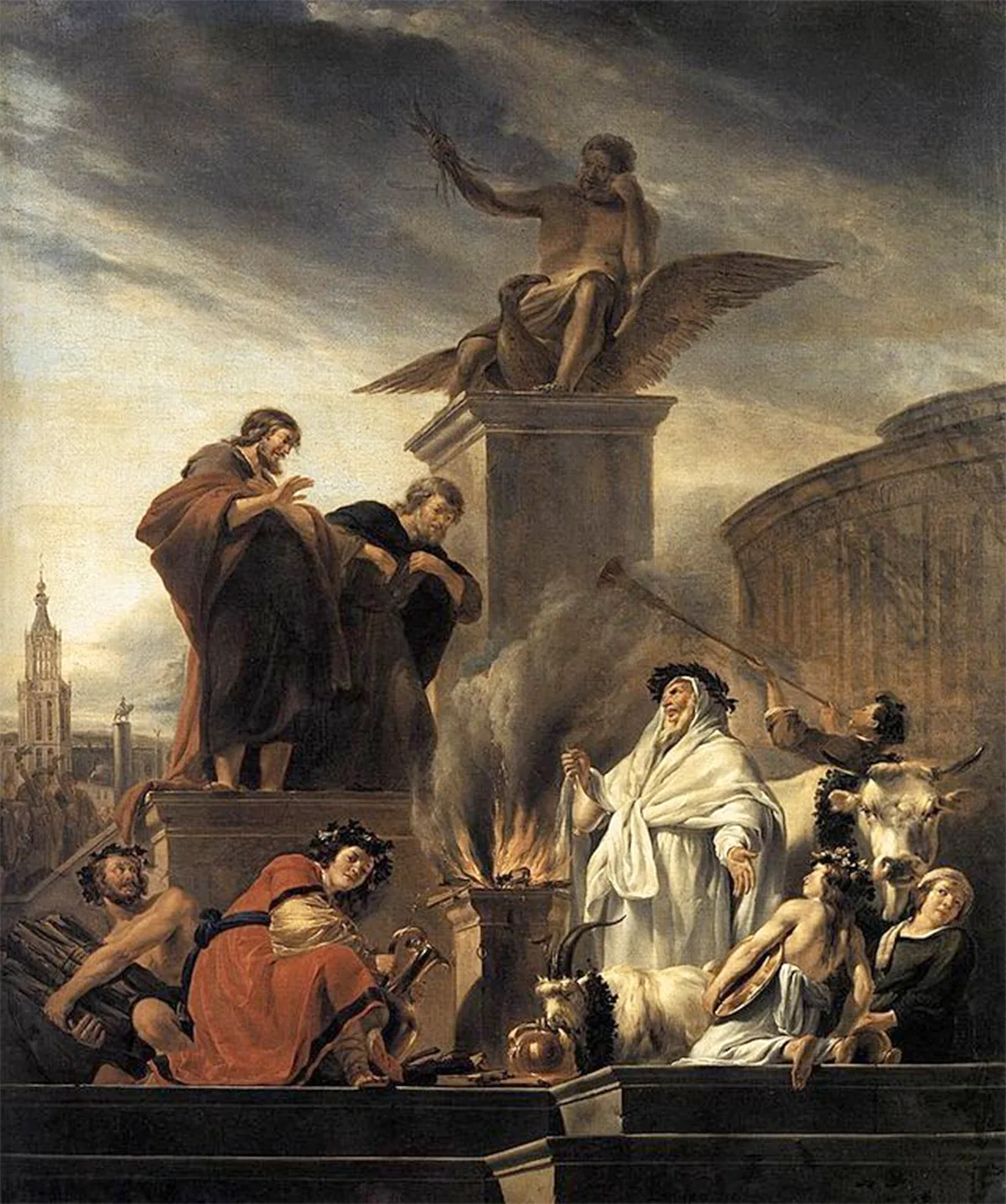
When the Antioch church fasts and prays, the Holy Spirit tells the church to “set apart for me Barnabas and Saul for the work to which I have called them” (Acts 13:2). This begins what we refer to as Paul’s first missionary journey. John Mark, Barnabas’s kinsman, accompanies them as their helper but leaves them in Perga and returns to Jerusalem (Acts 13:13–14:20). Paul and Barnabas continue preaching in Pisidian Antioch, Iconium, Lystra and Derbe. The two establish churches and leave behind a recognized system of elders for governing (Acts 14:23).
A bit later, Paul approaches Barnabas about going back to visit the places where they had preached before (Acts 15:36). Barnabas wishes to give John Mark another chance, but Paul objects. What Luke describes as a “sharp disagreement” erupts, with Barnabas and John Mark sailing for Cyprus, and Paul traveling with Silas for Syria and Cilicia (Acts 15:37–41). There is no text suggesting that Barnabas and Saul prayed on the matter or sought a mediator, however, following this event, Paul becomes the predominant character in Acts.
Luke writes in Acts 11:24 that Barnabas “was a good man, full of the Holy Spirit and faith.” He reports that it was in Antioch, Syria that the disciples of Barnabas were called Christians for the first time (Acts 11:26). Perhaps the character traits of Barnabas—his goodness, faith, big heartedness, courage, generosity, humbleness, self-sacrifice, open-mindedness, boldness and the fact the he was full of the Holy Spirit—were also to be found in other believers within this early church.


