
Bible Location

Ammon

Also known as: Ammon Canaanite state
A Visit With Jesus

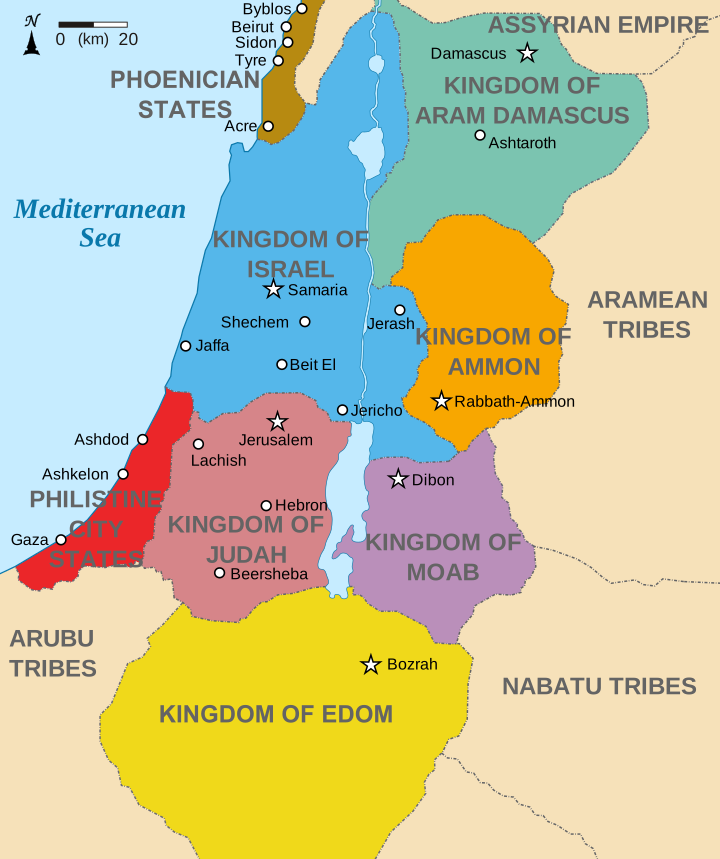
Ammon was an ancient kingdom east of the Jordan River whose people, the Ammonites, appear frequently in the Old Testament. Their principal city was Rabbah, or Rabbath-Ammon, located at the site of modern Amman, Jordan.

According to Genesis 19:38, the Ammonites traced their ancestry to Ben-ammi, a son of Lot. Israel's relationship with Ammon alternated between peaceful coexistence and conflict. Deuteronomy 2:19 instructed Israel not to seize Ammonite territory during the journey toward Canaan, while later books describe repeated military and political conflicts.

The kingdom occupied territory east of the Jordan, particularly around the upper Jabbok River and Rabbah. Archaeological remains and inscriptions provide substantial evidence for the Iron Age Ammonite kingdom.

Ammon

Biblical Significance

The Ammonites were closely related in biblical tradition to Israel through Lot. Deuteronomy 2:19 records God's command that Israel not attack or seize the land of the Ammonites because their territory had been given to the descendants of Lot.

Relations later became hostile. Judges 10-11 describes Ammonite oppression and Jephthah's war against them. During the monarchy, Saul, David, and later kings of Judah encountered Ammonite rulers and armies. David's war with Rabbah forms the political background of the account involving Uriah and Bathsheba in 2 Samuel 11-12.

The prophets also addressed Ammon, condemning violence and hostility toward Israel while announcing judgment and, in some passages, eventual restoration.

Historical Background

Ammon emerged as a recognizable Iron Age kingdom east of the Jordan. Its capital, Rabbath-Ammon, benefited from a defensible location and important water resources. The kingdom occupied territory in what is now north-central Jordan.

Ammon interacted with neighboring Israel, Moab, Edom, Aram, and the major Mesopotamian empires. Assyrian records mention Ammonite kings among rulers who paid tribute or participated in regional political affairs.

Archaeology has recovered Ammonite inscriptions, pottery, fortifications, and other remains. Rabbah continued as an important city after the Ammonite period and was later known as Philadelphia before the ancient name survived in the modern name Amman.

Modern Identification

The general territory of ancient Ammon is securely located in modern Jordan east of the Jordan River. Its heartland centered on Rabbath-Ammon, whose site is occupied by modern Amman.

The Amman Citadel preserves remains from numerous periods and provides a physical connection with the ancient city. The precise boundaries of the Ammonite kingdom changed over time, so modern maps should treat its borders as historical approximations rather than fixed lines.

Scripture References

Related Resources

Sources

Bible: Genesis 19:38, Deuteronomy 2:19, Judges 10-11, 1 Samuel 11, 2 Samuel 10-12, 2 Chronicles 20:10; Encyclopedia of the Bible: Rabbah; archaeological and historical studies of the Ammonite kingdom and Rabbath-Ammon