
Bible Location

Gabbatha

A Visit With Jesus

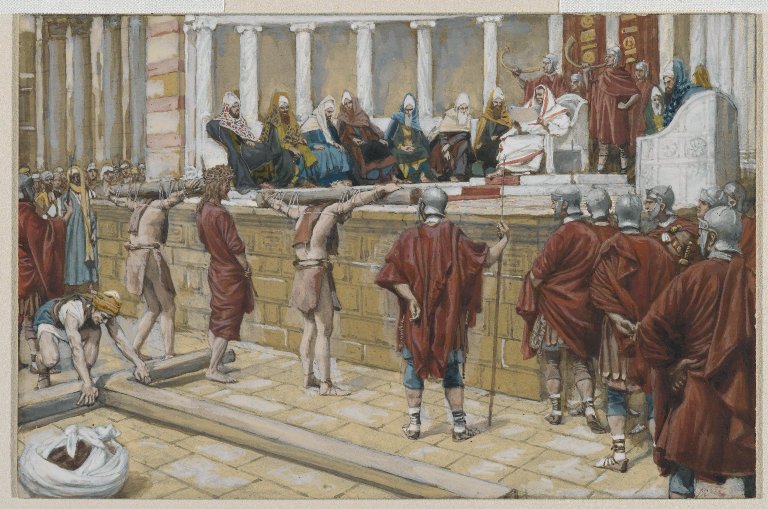
Gabbatha is the Aramaic or Hebrew name given in John 19:13 for the place in Jerusalem also called the Pavement, where Pontius Pilate sat on the judgment seat during the trial of Jesus.

At this location Pilate presented Jesus to the crowd and ultimately delivered Him to be crucified. Gabbatha therefore belongs to the final sequence of events preceding the crucifixion.

Its precise location depends largely upon the unresolved question of where Pilate was residing and conducting judicial proceedings while in Jerusalem.

Gabbatha

Biblical Significance

John 19:13 states that when Pilate heard the accusations being made against Jesus, he brought Him outside and sat upon the judgment seat at a place called the Pavement, or in the Hebrew or Aramaic language, Gabbatha.

The setting was a formal place of judgment. Pilate continued his exchange with the Jewish leaders there before ultimately handing Jesus over for crucifixion.

Gabbatha is therefore closely associated with the Roman trial of Jesus and with the political and judicial circumstances immediately preceding His journey to Golgotha.

Historical Background

Roman governors of Judea normally resided at Caesarea Maritima but came to Jerusalem during major festivals when large crowds increased the possibility of unrest. The governor would use an appropriate administrative and residential complex within Jerusalem.

Two principal locations have historically been proposed for Pilate's praetorium: the Antonia Fortress near the Temple Mount and Herod's palace complex on the western side of the city.

Modern historical and archaeological discussion has increasingly emphasized Herod's palace as the likely residence of Roman governors when they were in Jerusalem, although the exact location of the judgment proceedings described by John cannot be demonstrated archaeologically.

Modern Identification

No archaeological feature can presently be identified conclusively as Gabbatha. The traditional Via Dolorosa associates the judgment with the Antonia Fortress area, where ancient paving survives beneath later structures.

Some of that pavement belongs to later Roman construction and therefore cannot simply be identified as the pavement upon which Pilate stood. If Pilate used Herod's palace as his Jerusalem praetorium, Gabbatha would instead have been in the western part of the city.

AVWJ should therefore present Gabbatha as a location within ancient Jerusalem whose precise position remains uncertain.

Scripture References

Related Resources

Sources

Bible: John 18:28-19:16; Josephus concerning Herod's palace and Roman administration of Jerusalem; archaeological and historical studies of the Antonia Fortress, Herodian palace, praetorium, and ancient Jerusalem