
Bible Location

Elam

Also known as: Elam Pre-Iranic Nation in Ancient Iran
A Visit With Jesus

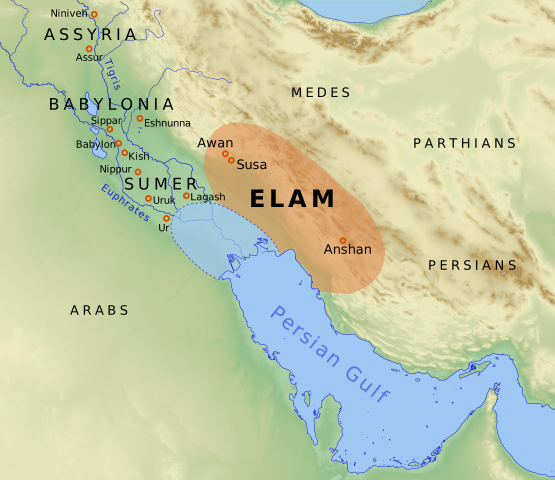
Elam was an ancient civilization east of southern Mesopotamia in territory corresponding principally to southwestern Iran. Its political boundaries varied greatly over its long history, and important Elamite centers included Susa and Anshan.

Genesis 10:22 names Elam among the sons of Shem, while later biblical books refer to Elam as a people and geographical region. Elam repeatedly interacted with the kingdoms of Mesopotamia.

The ancient city of Susa, later an important Persian royal center and the setting of biblical events in Esther and Daniel, had deep connections with Elamite civilization.

Elam

Biblical Significance

Genesis 10:22 includes Elam among the descendants of Shem. Genesis 14 also names Chedorlaomer king of Elam as the leader of the eastern coalition that campaigned in Canaan before being defeated by Abraham.

Isaiah 11:11 includes Elam among the lands from which God would recover His scattered people. Isaiah 21 and Jeremiah 49 contain prophetic material concerning Elam.

Elamites also appear in Acts 2:9 among the peoples represented at Pentecost, showing that the ancient regional name remained meaningful long after the height of the independent Elamite kingdoms.

Historical Background

Elam developed east of Mesopotamia and had a long history extending back into the third millennium BC and earlier. Its political geography was complex, with Susa in the lowlands and Anshan farther east among its most important centers.

Elamite rulers repeatedly competed and interacted with Sumerian, Akkadian, Babylonian, and Assyrian states. At different periods Elam exercised considerable power in southern Mesopotamia.

Assyrian campaigns severely weakened Elam during the seventh century BC. The region later became incorporated into the Persian imperial world, while Susa developed into one of the principal Achaemenid royal centers.

Modern Identification

Ancient Elam occupied parts of southwestern Iran, particularly modern Khuzestan and adjoining highland regions. Its boundaries changed considerably over its long history.

Older scholarship sometimes treated Elam and Susiana as virtually synonymous, but modern research recognizes a more complex geography. Susa was an important Elamite center, but Elam extended beyond the Susiana plain and included regions farther east.

Scripture References

Related Resources

Sources

Bible: Genesis 10:22, Genesis 14:1-17, Isaiah 11:11, Isaiah 21:2, Jeremiah 49:34-39, Acts 2:9; Encyclopaedia Iranica: Elam and Susa; Elamite and Mesopotamian inscriptions; archaeological studies of Susa, Anshan, and ancient southwestern Iran