
Bible Location

Chaldea

Also known as: Chaldea Mesopotamian state, eventually encompassing Babylonia
A Visit With Jesus

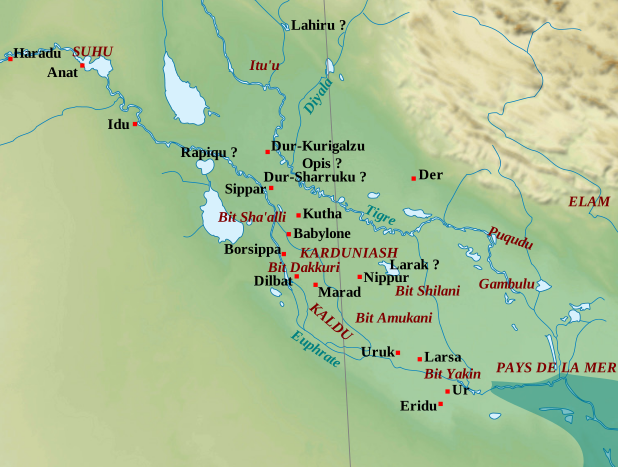
Chaldea was a region of southern Mesopotamia associated with the Chaldeans, a people who became increasingly important in Babylonia during the first millennium BC. The name eventually became closely associated with Babylon itself, especially during the Neo-Babylonian period.

Scripture frequently uses "Chaldeans" for the Babylonian power that conquered Judah. The Chaldean dynasty reached its greatest prominence under Nebuchadnezzar II, whose armies captured Jerusalem and carried many Judeans into exile.

Chaldea should therefore be understood historically as a southern Mesopotamian region and people whose name later became strongly associated with the Babylonian Empire.

Chaldea

Biblical Significance

The Chaldeans appear repeatedly in the later Old Testament. The biblical writers often use the term in connection with the Babylonian armies that threatened and eventually conquered Judah.

Second Kings, Chronicles, Jeremiah, Ezekiel, Habakkuk, and Daniel all reflect the growing importance of the Chaldeans. Their conquest of Jerusalem and destruction of the Temple in 586 BC brought the kingdom of Judah to an end and began the major phase of the Babylonian exile.

Ezekiel 23:16 describes Jerusalem turning toward the Chaldeans, while Habakkuk portrays them as a powerful and terrifying nation raised up as an instrument of judgment. Daniel uses the term in both ethnic and professional contexts within the Babylonian court.

Historical Background

The Chaldeans were tribal groups established principally in southern Babylonia during the early first millennium BC. Assyrian records mention several Chaldean tribal territories in the marshlands and lower Euphrates region.

Chaldean leaders periodically gained control of Babylon. Their greatest political success came when Nabopolassar established the Neo-Babylonian dynasty after the decline of Assyrian power. His son Nebuchadnezzar II transformed Babylon into the dominant power of the Near East.

Because this dynasty ruled Babylonia during the period most important to Judah, later writers sometimes used "Chaldean" and "Babylonian" in overlapping ways. Historically, however, Chaldea and Babylonia were not originally identical terms.

Modern Identification

Ancient Chaldea lay in southern Mesopotamia, principally within modern southern Iraq near the lower Euphrates and Tigris river systems and the head of the Persian Gulf.

Its boundaries were not fixed, and the political importance of individual Chaldean tribes changed through time. AVWJ should therefore represent Chaldea as a historical region rather than as a country with precisely defined permanent borders.

Scripture References

Related Resources

Sources

Bible: 2 Kings 24-25, 2 Chronicles 36, Jeremiah 21-52, Ezekiel 23:16, Habakkuk 1, Daniel 1-5; Babylonian Chronicles; Assyrian royal inscriptions; historical studies of the Chaldeans and Neo-Babylonian Empire