
Bible Location

Cilicia

Also known as: Cilicia Nation in Asia Minor
A Visit With Jesus

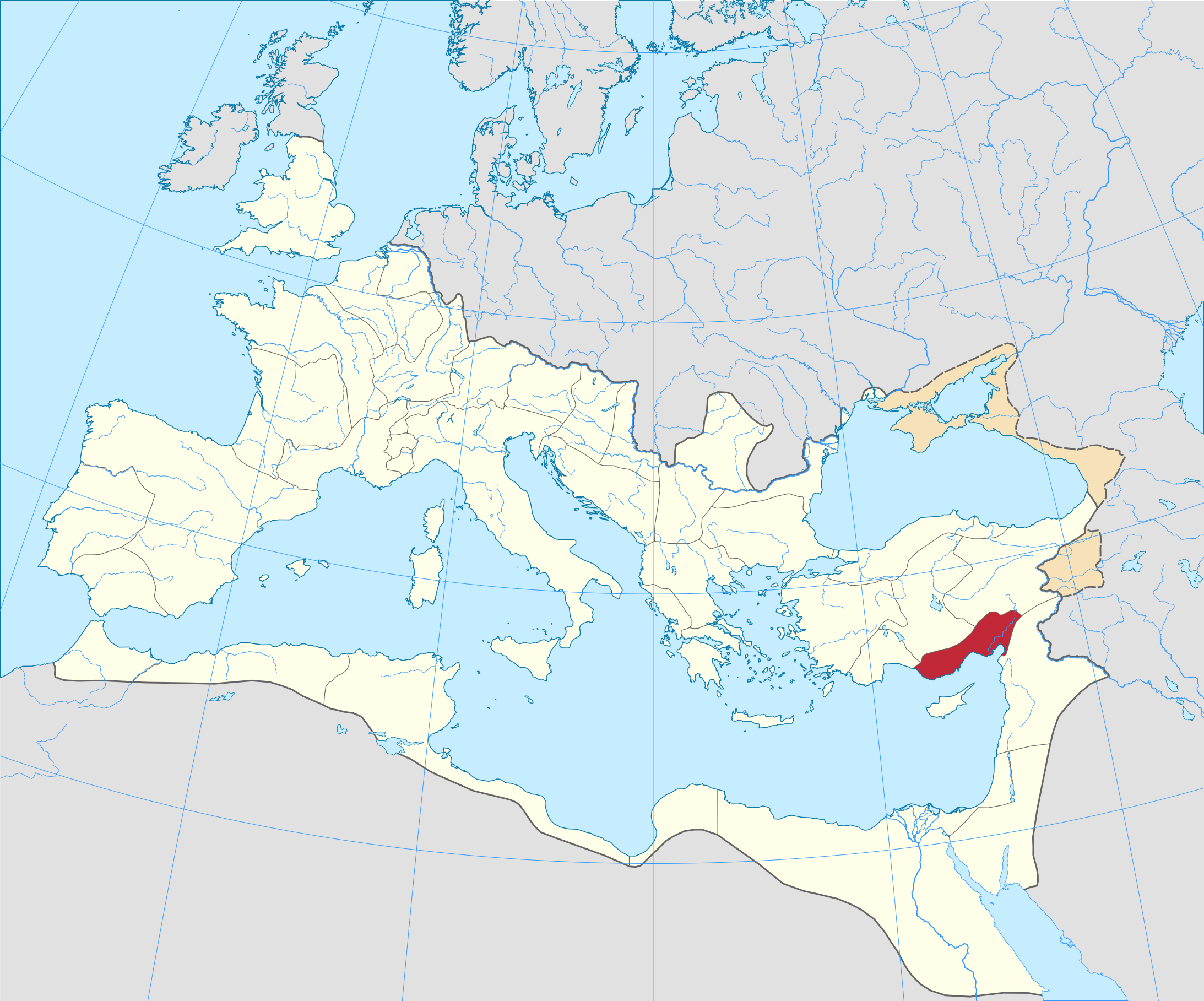
Cilicia was a region of southeastern Asia Minor along the northeastern Mediterranean coast. Its principal city was Tarsus, the birthplace of the apostle Paul.

The New Testament refers to Jews from Cilicia in Jerusalem and repeatedly associates Paul with the region. Acts 22:3 records Paul describing himself as a Jew born in Tarsus of Cilicia.

Cilicia occupied a strategically important position between Anatolia and Syria, with major routes passing through the Taurus Mountains toward the eastern Mediterranean.

Cilicia

Biblical Significance

Cilicia is closely associated with Paul. Acts 22:3 records his statement that he was born in Tarsus of Cilicia, giving the region a direct connection with one of the most important figures in early Christianity.

Acts 6:9 mentions members of a synagogue that included people from Cilicia among those disputing with Stephen. After Paul's conversion and early ministry, Acts 9:30 records his departure for Tarsus.

Acts 15:23 and Acts 15:41 show that Christian congregations existed in Cilicia relatively early. Paul and Silas later traveled through Syria and Cilicia strengthening these churches.

Historical Background

Cilicia lay between the Mediterranean Sea and the Taurus Mountains. The western portion was rugged and mountainous, while the eastern Cilician plain contained fertile agricultural land and important cities.

The region came under a succession of ancient powers, including Persian, Hellenistic, and Roman control. Its location made it an important corridor between Asia Minor, Syria, and Mesopotamia.

Tarsus became Cilicia's most celebrated city and was known for commerce, education, and Hellenistic culture. During the Roman period the political organization of Cilicia changed several times, so the exact provincial boundaries varied.

Modern Identification

Ancient Cilicia corresponds principally to the southeastern Mediterranean region of modern Turkey, especially the areas surrounding Tarsus, Adana, and the Cilician plain.

Because Cilicia was a historical region whose administrative boundaries changed under different rulers, it should not be represented as though it possessed one permanent border throughout the biblical period.

Scripture References

Related Resources

Sources

Bible: Acts 6:9, Acts 9:30, Acts 15:23, Acts 15:41, Acts 21:39, Acts 22:3, Acts 23:34; historical and geographical studies of Roman Cilicia, Tarsus, and southeastern Asia Minor