
Bible Location

Philistia

Also known as: Philistia - Southern Coastal Region
A Visit With Jesus

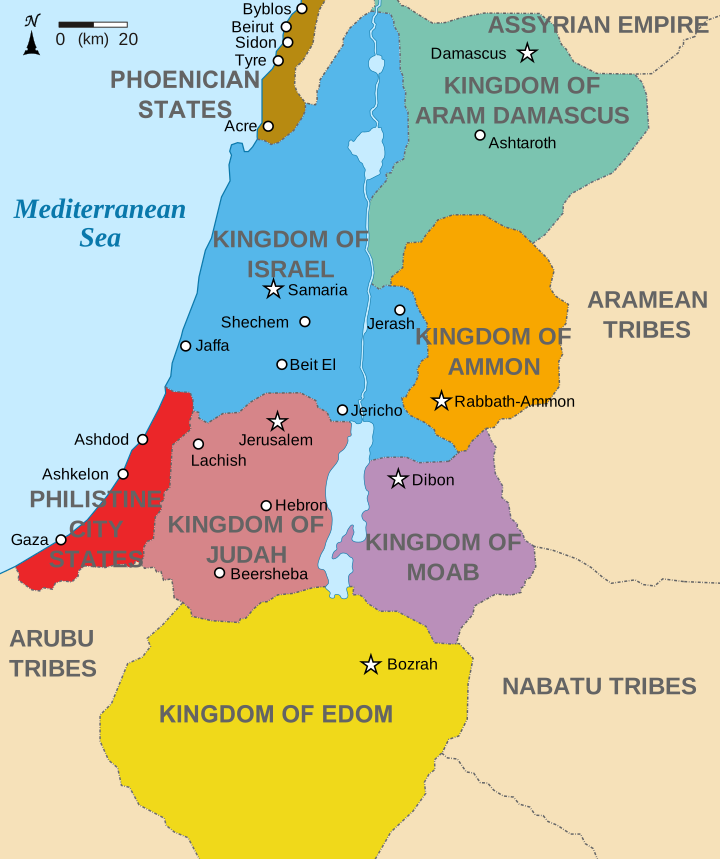
Philistia was the coastal territory occupied by the Philistines in the southern Levant during much of the Iron Age. Its principal cities were Gaza, Ashkelon, Ashdod, Ekron, and Gath, commonly described as the five cities of the Philistine pentapolis.

The Philistines appear frequently in the books of Judges and Samuel as major opponents of Israel. Samson's conflicts, the capture of the Ark of the Covenant, and many of the battles of Saul and David occurred within the context of Israelite-Philistine rivalry.

Philistia should not be described simply as the "original name of Palestine." The two terms are historically related, but Philistia was a much smaller and more specific Iron Age region.

Philistia

Biblical Significance

The Philistines appear repeatedly as inhabitants of the southern coastal plain and as military rivals of Israel.

Samson's career unfolded largely along the border between Judah and Philistine territory, involving places such as Timnah, Gaza, and the Sorek Valley.

During the time of Samuel, the Philistines defeated Israel and captured the Ark of the Covenant. The Ark was taken through several Philistine cities before being returned.

Saul fought repeatedly against the Philistines and died during battle on Mount Gilboa. David also fought them extensively and eventually broke much of their military dominance during his reign.

Historical Background

The Philistines became prominent along the southern coastal plain during the transition from the Late Bronze Age to the Iron Age. Archaeology reveals significant changes in material culture at several Philistine sites during this period.

The five principal Philistine cities were Gaza, Ashkelon, Ashdod, Ekron, and Gath. Each had its own ruler, although the cities frequently acted together.

Philistine material culture initially displayed strong connections with the Aegean world and subsequently became increasingly integrated with the cultures of the southern Levant.

Assyrian, Babylonian, and later imperial expansion progressively ended the independent political importance of the Philistine city-states.

Modern Identification

Philistia occupied the southern coastal plain of the Levant, principally within portions of modern Israel and the Gaza Strip.

Its boundaries changed through time, and Philistine influence sometimes extended inland toward the Shephelah.

Philistia should be distinguished from later uses of the geographical name Palestine, which eventually came to designate a much broader region.

Scripture References

Related Resources

Sources

Bible: Genesis 21:32-34, Joshua 13:2-3, Judges 13-16, 1 Samuel 4-7, 1 Samuel 13-14, 1 Samuel 17, 1 Samuel 28-31, 2 Samuel 5:17-25; Egyptian and Assyrian texts; archaeological excavations at Ashkelon, Ashdod, Ekron, Gath, and other Philistine sites