
Bible Location

Perga

Also known as: Perga town In Asia Minor
A Visit With Jesus

Perga was an important ancient city of Pamphylia in southern Asia Minor. Located inland from the Mediterranean coast, it served as a major political, commercial, and religious center of the region.

Perga appears in Acts during Paul's first missionary journey. Paul, Barnabas, and John Mark traveled there after sailing from Cyprus. At Perga, John Mark left the missionary party and returned to Jerusalem.

Paul and Barnabas later returned to Perga and preached there before departing from the nearby port of Attalia.

Perga

Biblical Significance

During the first missionary journey, Paul and his companions sailed from Paphos on Cyprus to the southern coast of Asia Minor and traveled to Perga in Pamphylia.

At Perga, John Mark departed from Paul and Barnabas and returned to Jerusalem. His departure later became the source of disagreement between Paul and Barnabas when planning another missionary journey.

Paul and Barnabas continued from Perga into the interior toward Antioch of Pisidia.

On their return journey they came again to Perga, where Acts specifically states that they preached the word before traveling to Attalia and sailing back toward Antioch in Syria.

Historical Background

Perga was one of the principal cities of Pamphylia. The settlement stood several miles inland from the Mediterranean but communicated with the coast through the navigable Cestrus River and nearby ports.

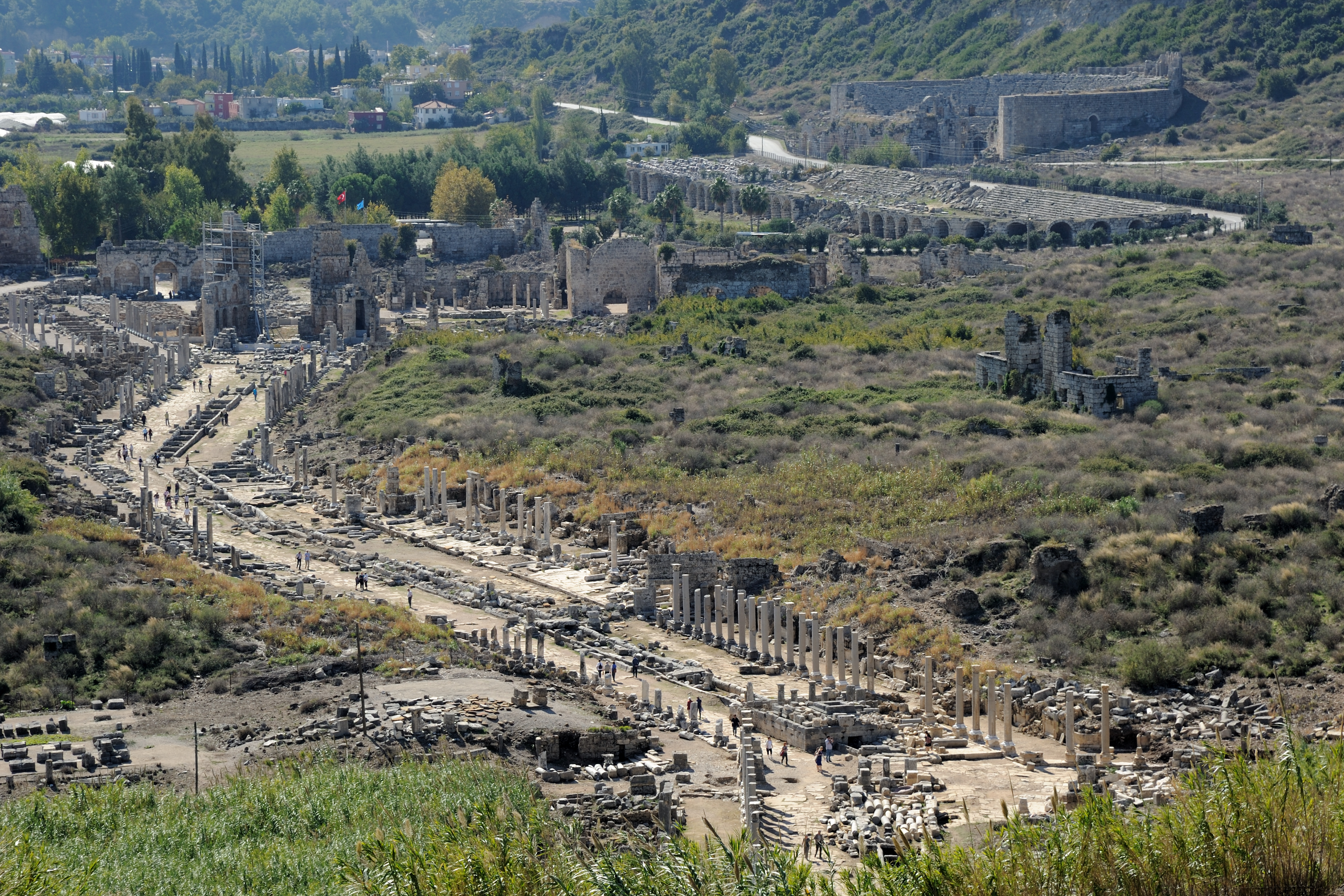
The city possessed monumental streets, gates, baths, a theater, stadium, temples, and other public structures characteristic of prosperous Hellenistic and Roman cities.

Perga was particularly associated with the worship of Artemis, whose sanctuary contributed to the religious prominence of the city.

Modern Identification

Ancient Perga is securely identified with the extensive archaeological site near modern Aksu, east of Antalya in southern Turkey.

The surviving ruins include monumental Roman and Hellenistic structures, although many visible remains date from periods later than Paul's first visit.

The identification of the site itself is certain and provides an excellent geographical context for the route described in Acts.

Scripture References

Related Resources

Sources

Bible: Acts 13:13-14, Acts 14:24-26, Acts 15:36-39; ancient geographical and inscriptional sources; archaeological excavations and historical studies of Perga and Roman Pamphylia