
Bible Location

Palestine (region)

Also known as: Palestine
A Visit With Jesus

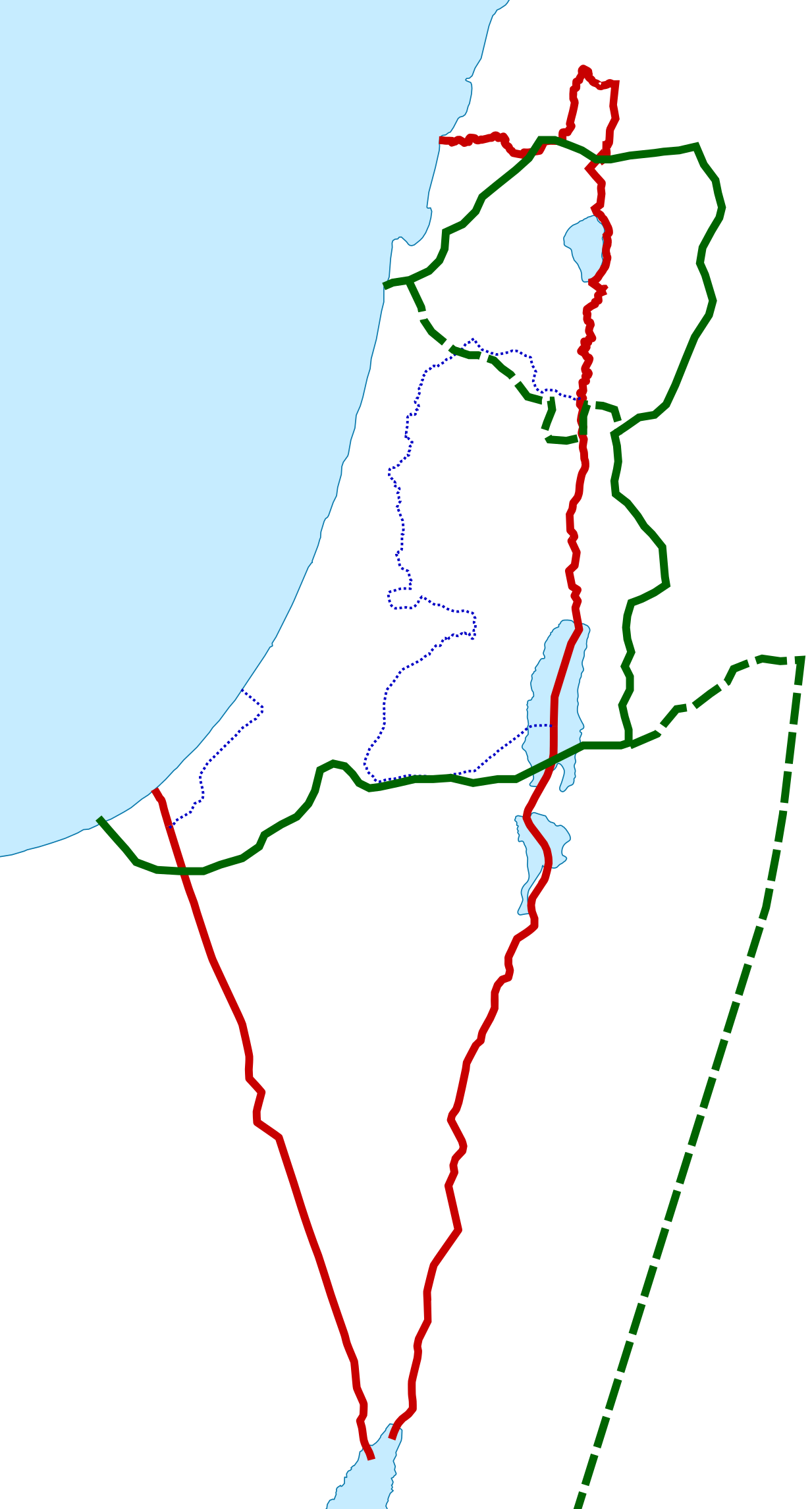
Palestine is a historical geographical name that has been applied with different meanings and boundaries to the southern Levant. The term ultimately derives from the name associated with Philistia and the Philistines but later acquired a much broader geographical meaning.

For biblical study, the term has often been used conventionally for the land in which most of the history of Israel, Judah, and the ministry of Jesus occurred. It should not, however, be assumed to be the ordinary biblical name for the entire land in every historical period.

Because the meaning and boundaries of "Palestine" have changed substantially through history, AVWJ should use the term primarily as a historical-geographical designation and identify the period intended.

Palestine (region)

Biblical Significance

The Hebrew Bible uses the related term Pelesheth principally for Philistia, the territory associated with the Philistines along the southern coastal plain. Many modern translations therefore render passages formerly translated "Palestina" as "Philistia."

The Bible uses several other names for the wider land depending upon historical and theological context, including Canaan, the land of Israel, the land of Judah, and the Holy Land.

The broader term Palestine became increasingly common in Greek, Roman, and later geographical usage. It is therefore useful in biblical scholarship as a conventional regional designation, but it should not erase the more specific names actually used by biblical writers.

Historical Background

The name Palestine ultimately developed from terminology associated with the Philistines and Philistia. Classical Greek writers extended related terminology beyond the Philistine coastal homeland to describe a broader portion of the southern Levant.

Roman administrative terminology changed repeatedly. After the Bar Kokhba revolt in the second century AD, the province of Judaea was incorporated into a larger province generally known as Syria Palaestina.

During Byzantine, Islamic, Crusader, Mamluk, Ottoman, and modern periods, geographical and administrative terminology continued to change. In the twentieth century "Palestine" also became the formal name of the British Mandate territory.

Modern Identification

There is no single set of modern borders that can be projected backward onto every historical use of the word Palestine.

In biblical and archaeological literature the term has often been used broadly for portions of the southern Levant encompassing areas west and sometimes east of the Jordan River.

For AVWJ, more historically specific terms such as Canaan, Israel, Judah, Judea, Galilee, Samaria, Philistia, and Transjordan should be preferred whenever the biblical period permits greater precision.

Scripture References

Related Resources

Sources

Bible: Exodus 15:14, Psalms 60:8, Psalms 83:7, Isaiah 14:29-31, Joel 3:4; Herodotus and other classical geographical sources; Roman provincial history; historical geography of Canaan, Philistia, Israel, Judah, Judea, and the southern Levant