
Bible Location

Mount Sinai

Old Testament
A Visit With Jesus

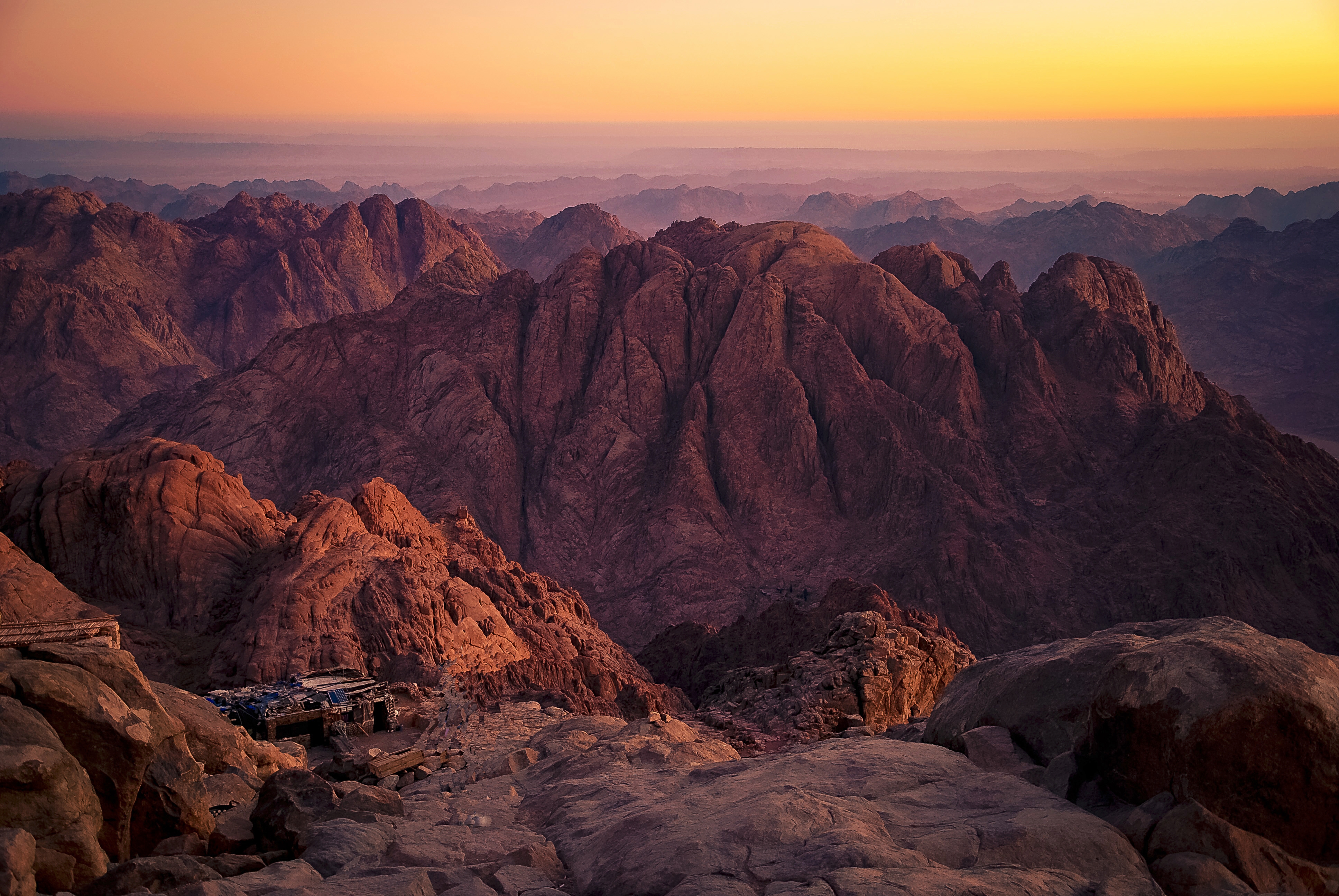
Mount Sinai is the mountain where, according to the biblical account, God revealed Himself to Israel after the Exodus from Egypt and established His covenant with the nation. Moses ascended the mountain and received the commandments and instructions that became foundational to Israel's covenant life.

The Bible also uses the name Horeb in connection with the mountain of God. Scholars differ over whether Sinai and Horeb are simply alternative names for the same mountain or reflect different textual traditions.

The exact modern location of biblical Mount Sinai remains uncertain. Jebel Musa in the southern Sinai Peninsula is the best-known traditional identification, but several alternative locations have been proposed.

Mount Sinai

Biblical Significance

Moses first encountered God at the burning bush while tending the flock of his father-in-law near Horeb, the mountain of God. There God commissioned him to return to Egypt and lead the Israelites from slavery.

After the Exodus, Israel arrived at the wilderness of Sinai and encamped before the mountain. God descended upon Sinai amid thunder, lightning, cloud, fire, smoke, and the sound of a trumpet.

At Sinai God gave Israel the Ten Commandments and established the covenant with the nation. Moses repeatedly ascended the mountain and received laws and instructions concerning worship, the tabernacle, priesthood, and Israel's covenant responsibilities.

The golden calf episode occurred while Moses was on the mountain. After interceding for Israel, Moses received a renewed set of tablets before the people eventually departed from Sinai toward the Promised Land.

Historical Background

The biblical narratives provide itinerary information concerning Israel's journey to Sinai but do not supply geographical coordinates sufficient to identify the mountain conclusively.

Christian tradition from late antiquity increasingly associated Mount Sinai with the mountainous region of the southern Sinai Peninsula. Jebel Musa became the principal traditional identification, and the monastery now known as Saint Catherine's developed near its foot during the Byzantine period.

Other proposed locations include Jebel Serbal and other mountains in Sinai, Har Karkom in the Negev, and mountains east of the Gulf of Aqaba in northwestern Arabia.

No archaeological discovery has established any proposed mountain as the biblical Sinai, and interpretations of the Exodus route differ substantially.

Modern Identification

The exact location of Mount Sinai remains unresolved.

Jebel Musa in the southern Sinai Peninsula is the most famous traditional identification and has been associated with Mount Sinai in Christian tradition for many centuries. Saint Catherine's Monastery preserves this ancient tradition.

Alternative proposals have placed Sinai elsewhere in the Sinai Peninsula, the Negev, or northwestern Arabia. None has achieved archaeological or scholarly consensus.

AVWJ should therefore distinguish clearly between the biblical certainty that Sinai is central to the Exodus narrative and the geographical uncertainty concerning which modern mountain corresponds to it.

Scripture References

Related Resources

Sources

Bible: Exodus 3:1-12, Exodus 19-34, Leviticus 7:38, Numbers 1:1, Numbers 10:11-12, Deuteronomy 4-5, Deuteronomy 33:2, Judges 5:5, 1 Kings 19:8, Nehemiah 9:13, Acts 7:30-38, Galatians 4:24-25; early Christian pilgrimage traditions; historical and archaeological studies concerning proposed locations of Mount Sinai