
Bible Location

Moab

Also known as: Moab Cannanite state
A Visit With Jesus

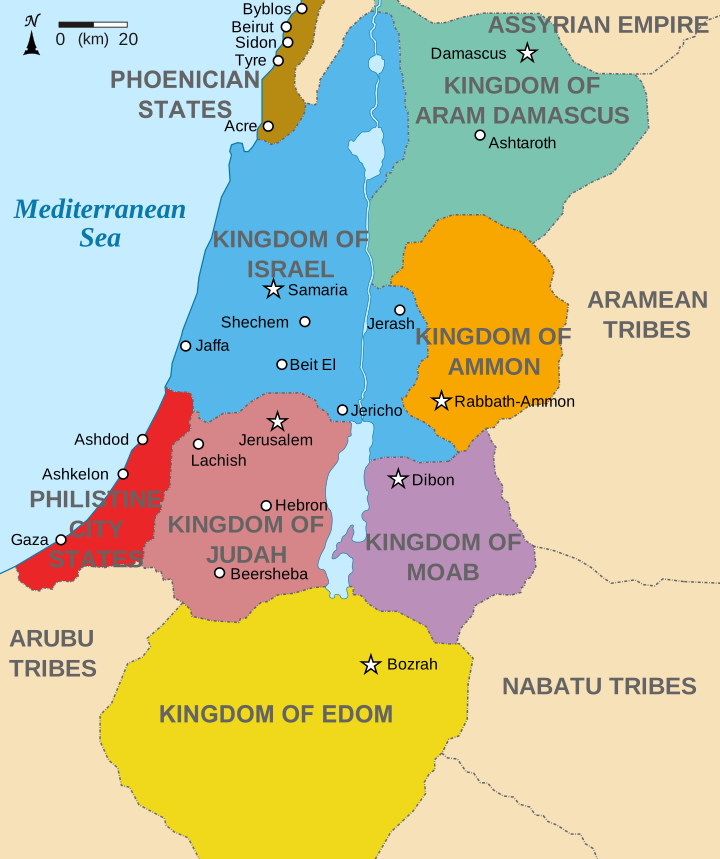
Moab was an ancient kingdom east of the Dead Sea in what is now central Jordan. The Moabites were closely related culturally and linguistically to the Israelites, and biblical tradition traces their ancestry to Moab, the son of Lot.

Moab appears frequently in the Old Testament. Israel passed along its territory during the journey toward Canaan, Ruth was a Moabite woman who became an ancestor of David, and the kingdoms of Israel and Moab later fought for control of territory east of the Jordan.

The ninth-century BC Mesha Stele provides an important Moabite account of King Mesha's conflict with Israel.

Moab

Biblical Significance

Genesis traces Moab's ancestry to Lot. During Israel's wilderness journey, Balak king of Moab summoned Balaam to curse Israel, although the intended curses became blessings.

The book of Ruth begins with an Israelite family from Bethlehem seeking refuge in Moab during a famine. Ruth the Moabite later returned to Bethlehem with Naomi, married Boaz, and became the great-grandmother of David.

During the monarchy, Israel and Moab alternated between conflict and political domination. Second Kings 3 records the rebellion of Mesha king of Moab against Israel following the death of Ahab.

The prophets also addressed Moab in oracles concerning judgment and the fate of neighboring nations.

Historical Background

Moab occupied the plateau east of the Dead Sea, with the Arnon River forming an important geographical feature within its territory. Its northern boundary shifted as Moab, Israel, and neighboring peoples competed for the plateau north of the Arnon.

The Mesha Stele, discovered at Dibon, provides an extraordinary ninth-century BC inscription written from the Moabite perspective. King Mesha describes Moab's subjection to Israel under Omri and his own recovery of disputed territory.

The inscription names Israel, Omri, the Moabite god Chemosh, and numerous places also known from the Bible. It provides one of the most significant independent inscriptions related to the history of the biblical kingdoms.

Modern Identification

Ancient Moab occupied territory in modern Jordan east of the Dead Sea, especially the plateau around Dhiban and extending southward toward the Wadi al-Hasa.

Its northern frontier varied considerably through time, particularly in the plateau north of the Arnon, modern Wadi Mujib, where Moabite and Israelite control changed repeatedly.

AVWJ should therefore avoid representing Moab with one fixed boundary for every biblical period.

Scripture References

Related Resources

Sources

Bible: Genesis 19:30-38, Numbers 21-25, Deuteronomy 2-3, Ruth, 1 Samuel 22:3-4, 2 Samuel 8:2, 2 Kings 3, Isaiah 15-16, Jeremiah 48; Mesha Stele; archaeological and historical studies of Dibon and Iron Age Moab