
Bible Location

Mesopotamia

Also known as: Mesopotamia Includes the kingdoms of Sumer, Akkad, Assyria, Babylonia, Chaldea and the neo Assyrian states of Adiabene, Osroene and Hatra
A Visit With Jesus

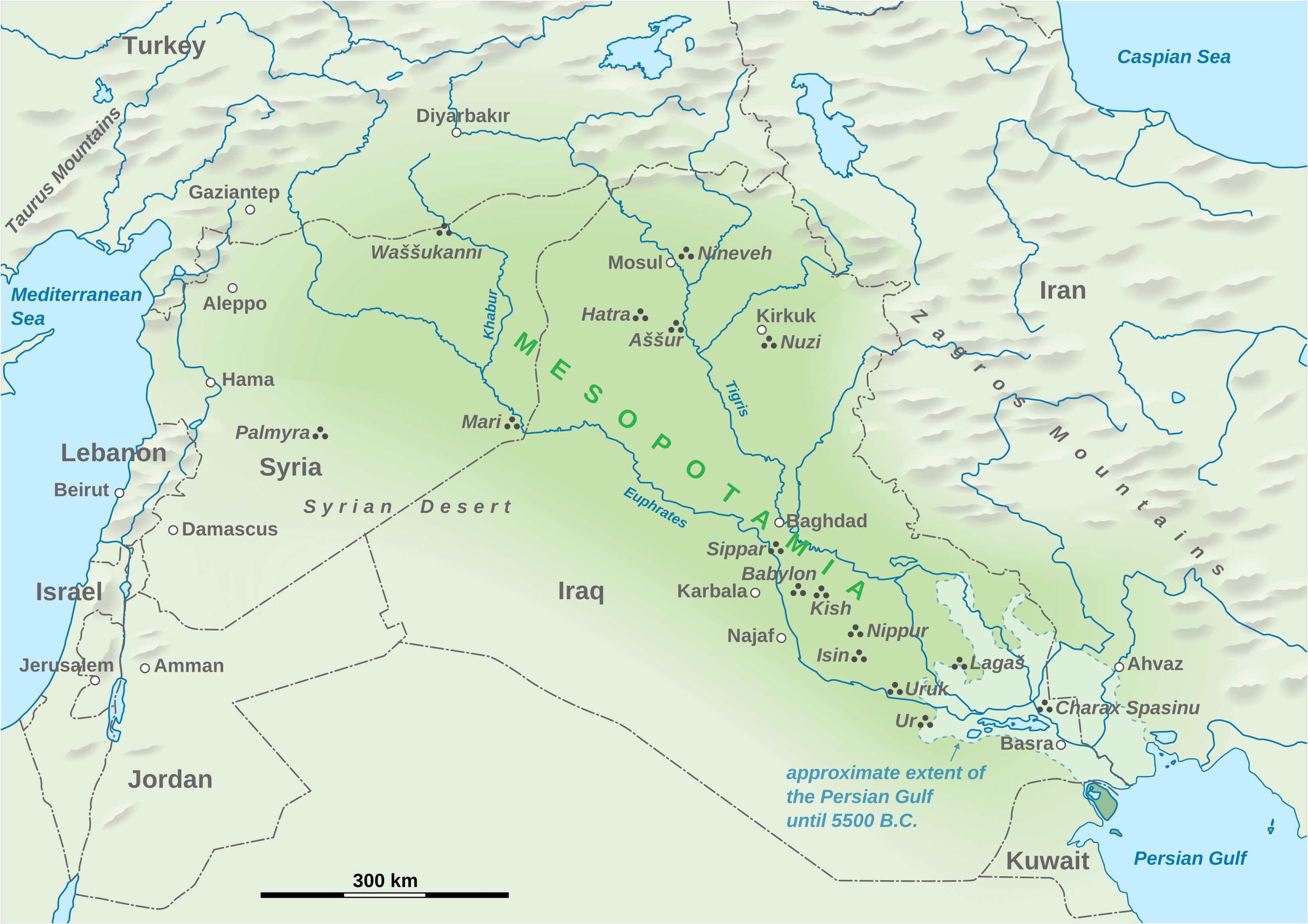
Mesopotamia is the great ancient region lying principally between and around the Tigris and Euphrates Rivers. Its name means "between the rivers." The region included many of the civilizations that shaped the political and cultural world of the Bible, including Sumer, Akkad, Babylonia, and Assyria.

Mesopotamia is associated with the ancestral world of Abraham and his family and later with the great empires that conquered Israel and Judah. In the New Testament, residents of Mesopotamia were among those present in Jerusalem at Pentecost.

Mesopotamia was a broad historical and geographical region rather than a single political kingdom.

Mesopotamia

Biblical Significance

Abraham's family originated in the Mesopotamian world. Genesis describes Terah taking Abram, Sarai, and Lot from Ur of the Chaldeans toward Canaan and settling at Harran. Abraham later sent his servant to the region of his relatives to obtain a wife for Isaac.

Acts 7 describes the God of glory appearing to Abraham while he was in Mesopotamia before he lived in Harran.

The Old Testament history of Israel was profoundly affected by Mesopotamian powers. Assyria conquered the northern kingdom of Israel, while Babylon later conquered Judah, destroyed Jerusalem and the Temple, and carried many Judeans into exile.

Acts 2:9 lists residents of Mesopotamia among the Jewish pilgrims who heard the apostles speaking in their own languages at Pentecost.

Historical Background

Mesopotamia supported some of the earliest urban civilizations in the world. The river systems and irrigation agriculture enabled the development of cities, writing, monumental architecture, organized states, and extensive systems of trade.

Sumerian city-states flourished in southern Mesopotamia, followed by periods of Akkadian, Babylonian, Assyrian, and other political dominance. Cities such as Ur, Babylon, Nineveh, Ashur, and Kish became major centers at different periods.

Cuneiform tablets from Mesopotamia preserve enormous quantities of administrative, legal, literary, religious, and historical information. These sources provide an important cultural background for understanding the ancient Near Eastern world in which biblical history unfolded.

Modern Identification

Ancient Mesopotamia corresponds primarily to modern Iraq together with portions of northeastern Syria, southeastern Turkey, and neighboring regions.

Its geographical extent varied according to period and usage. The biblical expression translated "Mesopotamia" can also represent more specific regions of upper Mesopotamia, particularly Aram-naharaim.

AVWJ should therefore present Mesopotamia as a broad historical region rather than assign it the borders of any single modern nation.

Scripture References

Related Resources

Sources

Bible: Genesis 11:27-32, Genesis 24:10, Deuteronomy 23:4, Judges 3:8, 1 Chronicles 19:6, Acts 2:9, Acts 7:2; Mesopotamian cuneiform texts; archaeological and historical studies of Sumer, Akkad, Babylonia, Assyria, and the Tigris-Euphrates region