
Bible Location

Tomb of Absalom

Old Testament
Also known as: Absalom Monument
A Visit With Jesus

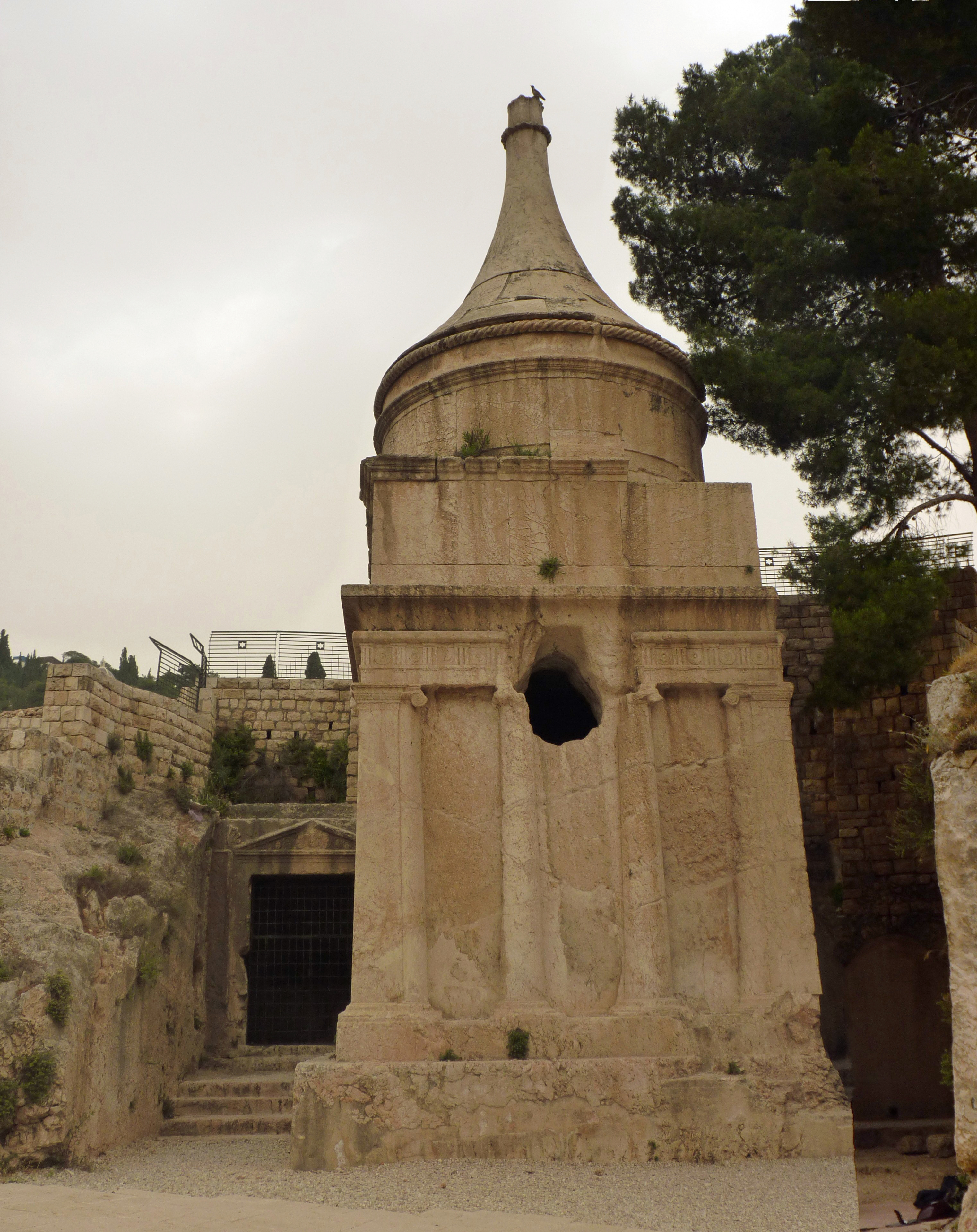
The Tomb of Absalom, also known as Absalom's Monument or Yad Avshalom, is a prominent rock-cut funerary monument in the Kidron Valley on the eastern side of Jerusalem, opposite the Temple Mount. Its distinctive form combines a square lower structure cut from the surrounding rock with an upper portion crowned by a conical roof.

For many centuries Jewish tradition has associated the monument with Absalom, the son of King David. Second Samuel records that Absalom erected a monument for himself in the King's Valley because he feared that he would have no son to preserve his name. The surviving Kidron Valley monument, however, dates from the late Second Temple period, approximately the first century BC or first century AD, many centuries after the time of David and Absalom.

The monument is therefore important both as an impressive example of ancient Jerusalem's funerary architecture and as the focus of a long-standing tradition connecting the Kidron Valley with the biblical account of Absalom.

Tomb of Absalom

Biblical Significance

Absalom was a son of David whose rebellion produced one of the most painful episodes of David's reign. After winning considerable popular support, Absalom declared himself king and forced David to flee Jerusalem. The rebellion ended when Absalom was killed after his hair became caught in a tree while his mule passed beneath it. David's grief over his son's death is one of the most memorable expressions of personal sorrow in the Old Testament.

Second Samuel 18:18 adds an important detail concerning Absalom's concern for his legacy. During his lifetime he had erected a pillar in the King's Valley and named it after himself, saying that he had no son to preserve his name. The biblical text states that this memorial continued to be known as "Absalom's Monument."

The monument now called the Tomb of Absalom should not be confused with certainty with the pillar described in 2 Samuel. Nevertheless, its traditional association with Absalom provides a tangible geographical connection with the biblical account and with the ancient practice of erecting memorial monuments to preserve a person's name.

Historical Background

The surviving monument belongs to a group of monumental rock-cut tombs in the Kidron Valley associated with Jerusalem's wealthy population during the late Second Temple period. Its architectural features reflect styles current in the Greco-Roman world and indicate a date far later than the tenth century BC, the traditional period of David and Absalom.

The identification of the monument with Absalom developed in antiquity and became deeply rooted in local tradition. Over the centuries the structure was also associated by various Christian traditions with other biblical figures. Greek inscriptions added in late antiquity contributed to some of these later identifications.

The monument's continuing visibility beside Jerusalem helped preserve these traditions. Whatever the identity of the person for whom the surviving structure was actually constructed, it remains an important example of the monumental funerary architecture that developed around Jerusalem during the Second Temple period.

Modern Identification

The monument traditionally called the Tomb of Absalom still stands in the Kidron Valley immediately east of Jerusalem's Old City. Its location is therefore certain; what is uncertain is the historical identity of the person for whom it was constructed.

Architectural dating places the existing monument in the late Second Temple period, roughly a thousand years after Absalom. It consequently cannot be the original monument erected by David's son if the biblical chronology is followed.

The traditional name remains historically important, but it is best understood as a long-standing identification rather than an archaeological identification of Absalom's actual tomb or memorial. The precise location of the pillar mentioned in 2 Samuel 18:18 is not securely known.

Scripture References

Related Resources

Sources

Bible: 2 Samuel 13-19, especially 2 Samuel 18:18; Oxford University Cult of Saints in Late Antiquity, E02746, Three Greek inscriptions from the so-called Tomb of Absalom; Nadav Na'aman, The King's Valley and Gallim: Two Biblical Toponyms Located in the Jerusalem District