Bible Figure
Simon Thassi

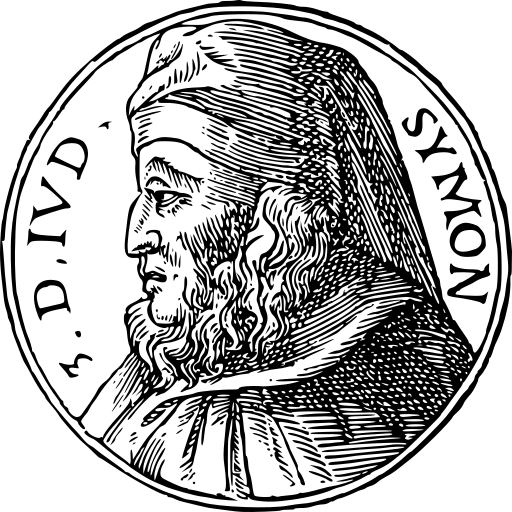
Simon Thassi was a son of Mattathias and the last surviving major leader among the original Maccabean brothers. After the capture and death of Jonathan Apphus, Simon assumed leadership, became high priest and ruler, and secured a degree of Jewish political independence from Seleucid control. His rule laid the institutional foundation of the Hasmonean dynasty. He was assassinated in 135/134 BC.
Biography
Simon, surnamed Thassi, was the second son of Mattathias and participated in the Maccabean struggle from its early stages. His father regarded him as a man of sound judgment and urged the brothers to heed his counsel. Simon fought alongside Judas and Jonathan, assisted Jewish communities threatened outside Judea, and took part in campaigns against Seleucid forces. When Jonathan was captured by Diodotus Tryphon, Simon rallied the nation and prevented the crisis from destroying the Hasmonean cause. After Jonathan's death, Simon became the acknowledged leader. He strengthened Jerusalem, reduced remaining Seleucid positions, and aligned himself with Demetrius II, from whom he obtained relief from tribute. Jewish independence was subsequently celebrated, and a public assembly confirmed Simon as high priest, military commander, and political leader, with authority intended to continue in his family. He renewed relations with Rome and Sparta and defended the territory against renewed Seleucid pressure. His rule ended when his son-in-law Ptolemy invited Simon and two of his sons to a banquet near Jericho and murdered them. Simon's surviving son John Hyrcanus escaped and succeeded him.
Biblical Significance
Simon transformed the achievements of the revolt into stable government. Under his leadership the Hasmonean movement attained practical independence and combined high-priestly, military, and political authority in one ruling family. That arrangement profoundly influenced Judean politics for the next century and forms important background for the competing religious and political institutions visible in the New Testament era.