Bible Figure
Mattathias

Mattathias was an elderly Jewish priest from Modein whose refusal to participate in Seleucid-imposed pagan worship helped ignite the Maccabean revolt. After killing both a Jew who approached the forbidden sacrifice and the royal official enforcing it, Mattathias fled with his sons and supporters. Before his death he urged continued resistance and designated Simon as counselor and Judas Maccabeus as military leader.
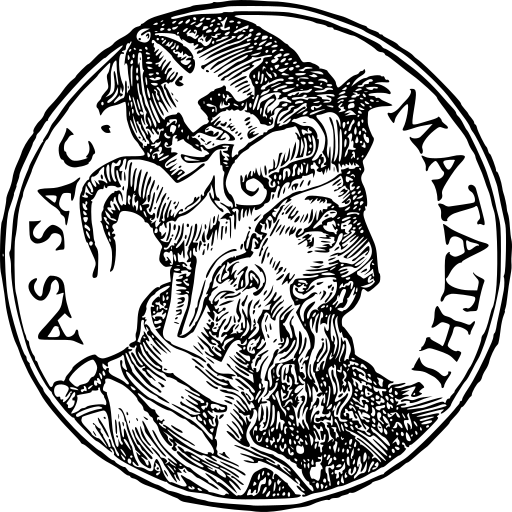
Biography
Mattathias was a priest of the line of Joiarib who lived at Modein during the reign of Antiochus IV Epiphanes. Seleucid policy had increasingly interfered with traditional Jewish worship, and royal officials eventually came to Modein to compel sacrifice according to the king's decree. Mattathias was invited to set an example by complying but publicly refused. When another Jewish man came forward to sacrifice, Mattathias killed him and the royal official and destroyed the altar. He then called on those zealous for the Law to follow him and fled with his sons into the countryside. The resistance movement grew as other faithful Jews joined them. Mattathias and his followers attacked pagan altars, opposed collaborators, and restored practices such as circumcision. A crisis arose when some Jewish fugitives refused to defend themselves on the Sabbath and were slaughtered; Mattathias and his supporters concluded that defensive fighting on the Sabbath was necessary for survival. Near the end of his life Mattathias exhorted his sons to remain faithful, naming Simon for counsel and Judas for military leadership. He died around 166 BC and was buried at Modein.
Biblical Significance
Mattathias is the initiating human figure in the Maccabean revolt. His resistance turned opposition to Seleucid religious coercion into an organized movement that his sons carried forward. Though his story is preserved in 1 Maccabees rather than the Protestant canon, the revolt safeguarded Jewish worship, led eventually to Hasmonean rule, and profoundly shaped the Judaism and Judea that form the historical setting of the New Testament.