Bible Figure
John Hyrcanus

John Hyrcanus I was a Hasmonean high priest and ruler of Judea from 135/134 to 104 BC. The son and successor of Simon Thassi, he survived the assassination that killed his father and brothers and went on to govern for about three decades. Under Hyrcanus, the Hasmonean state expanded substantially and became a major regional power.
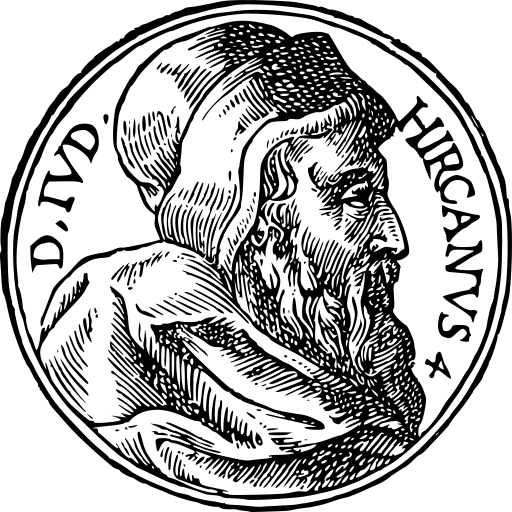
Biography
John Hyrcanus was a son of Simon Thassi and grandson of Mattathias, placing him in the second generation of the Hasmonean dynasty. Before becoming ruler he demonstrated military ability in the conflict with the Seleucid general Cendebeus. In 135/134 BC Simon and two of John's brothers were murdered at Dok near Jericho by Simon's son-in-law Ptolemy. John escaped the plot and succeeded his father as high priest and ruler. Early in his reign Antiochus VII Sidetes invaded Judea and besieged Jerusalem, forcing Hyrcanus into an accommodation with Seleucid power. After Antiochus' death, however, weakening Seleucid authority gave Hyrcanus greater freedom of action. He expanded Judean territory through military campaigns, including conquests in Idumea and Samaria, and strengthened the Hasmonean state politically and economically. Ancient accounts associate his rule with the destruction of the Samaritan temple on Mount Gerizim and with the incorporation of Idumeans into the Jewish state. His long reign ended in 104 BC and was followed by the increasingly monarchical rule of his descendants.
Biblical Significance
John Hyrcanus is important for biblical background because his reign transformed the Maccabean resistance movement into a durable territorial state. The expanded Hasmonean realm, its combination of political and high-priestly authority, and the religious controversies that developed during this era form part of the immediate historical background to first-century Judea. His career therefore helps bridge the world of the Maccabean revolt and the political-religious environment encountered in the New Testament.